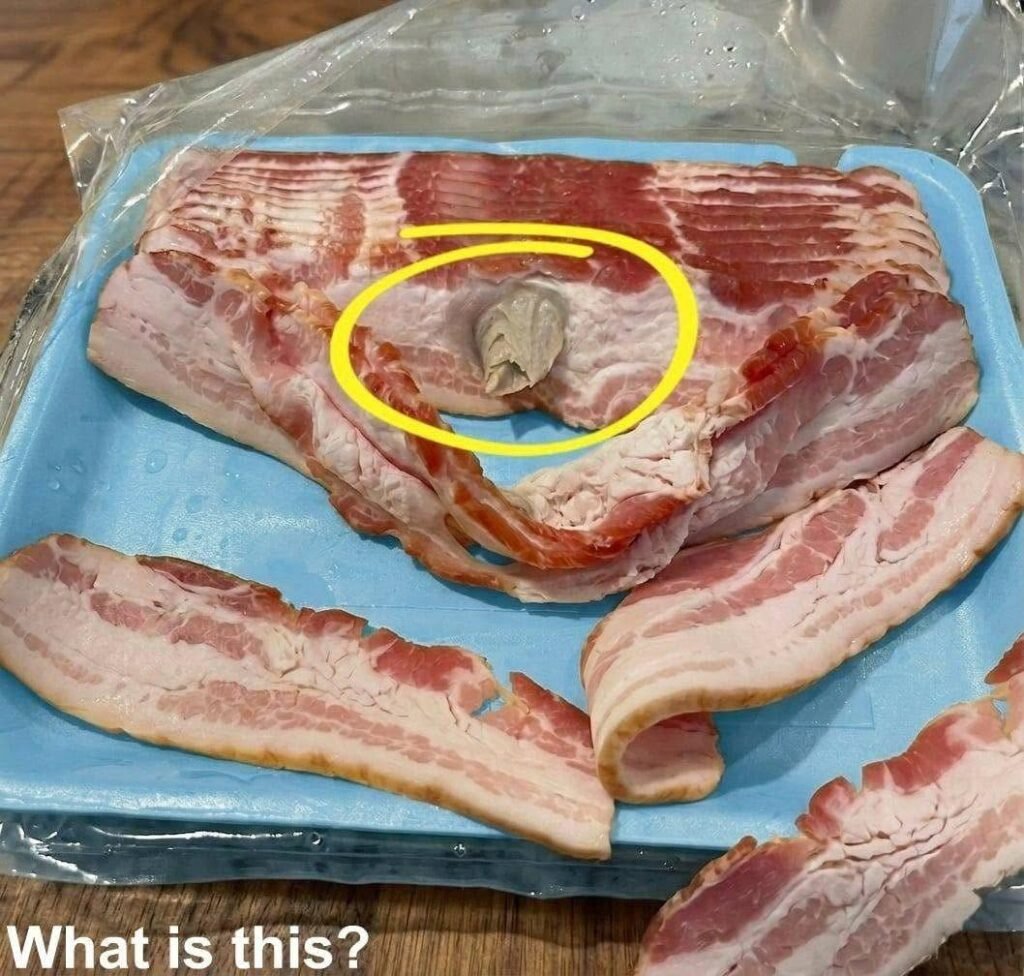
Bacon comes from the pork belly. Fat doesn’t always marble evenly. Sometimes it pools into a dense, rubbery lump that looks wildly different from the rest of the strips.
What it looks like: Pale, yellowish-white, firm, slightly waxy. Usually smooth and roundish.
Is it safe? Yes. It’s just fat. The texture might be unpleasant (chewy, dense), but it won’t hurt you.
What to do: Cut it off. Cook the rest.
2. Small Lymph Node (Gross, But Normal)
Animals have lymph nodes just like we do. They’re part of the immune system. Sometimes a piece of one ends up in the bacon.
What it looks like: Pale, bean-shaped, firm, sometimes with a slightly darker center. May be round or oval.
Is it safe? Yes. It’s safe to eat if fully cooked, but the texture is unpleasant (grainy, dense). Most people prefer to cut it out.
What to do: Cut it off. Cook the rest.
3. Bruise or Scar Tissue
Pigs are active animals. They get bumps, scrapes, and injuries. Healed tissue can be denser and darker than surrounding meat.
What it looks like: Denser, sometimes darker or reddish-brown. May be irregularly shaped.
Is it safe? Yes. It’s just healed tissue.
What to do: Cut it off. Cook the rest.
When to Actually Worry (Red Flags)
Let me be clear about when you should toss the whole package.
Toss the bacon if:
-
The lump is green, black, or blue (possible mold)
-
The bacon smells sour, rancid, or “off” (not just smoky)
-
The bacon is slimy or sticky (sign of bacterial growth)
-
The lump is moving (unlikely, but if it is, call an exterminator)
-
The bacon is past its expiration date and shows signs of spoilage
If the lump is pale, firm, and odorless? It’s almost certainly fat or lymph tissue. Cut it off. Cook the rest.
Why This Happens More Often with Bacon
Bacon is made from pork belly. Pork belly is a fatty, complex cut with many glands, lymph nodes, and connective tissues. When the meat is sliced thin (as bacon is), these natural structures become visible.
Why you don’t see this in other meats:
-
Chicken breast is lean and uniform (fewer visible structures)
-
Steak is cut thicker (lumps blend in)
-
Ground meat is, well, ground (everything is mixed together)
Bacon is unique: It’s thin, fatty, and contains many natural tissues that become visible during processing.
What About the “White Stuff” on Bacon? (Different Question)
Sometimes people confuse the pale “weird lump” with the natural white streaks of fat in bacon. Those are normal. That’s what makes bacon delicious.
The difference:
-
Normal fat: White or cream-colored, soft (raw), becomes translucent and crispy when cooked.
-
Weird lump: Pale, firm, rubbery, often round or bean-shaped, doesn’t cook the same way.
A Brief History of Bacon Processing (Why This Happens)
In the past, bacon was cut thicker, and butchers would trim out visible lymph nodes and odd fat deposits. But modern bacon is mass-produced and sliced very thin. Trimming every single slice is impractical.
Additionally, some lymph nodes are deep within the fat layer and aren’t visible until the meat is sliced. So they end up in the package.
It’s not a quality issue. It’s not a safety issue. It’s just a reality of processing animal products.
How to Handle the Weird Lump (Step-by-Step)
Step 1: Don’t panic. It’s almost certainly harmless.
Step 2: Examine the lump. Is it pale? Firm? Odorless? No green/black discoloration? No slime? If yes, proceed.
Step 3: Use a knife to cut around the lump. Remove it from the slice.
Step 4: Inspect the rest of the bacon. If everything else looks normal, cook as usual.
Step 5: If you’re still uncomfortable, cut off the affected slice entirely and cook the rest.
Step 6: If you’re really squicked out, toss the whole package. But know that you’re throwing away perfectly good bacon.
Other Weird Things You Might Find in Bacon (And What They Mean)
| Finding | What It Is | Safe? |
|---|---|---|
| White, chalky spots | Salt or fat crystallization | Yes |
| Greenish tint (not mold) | Oxidation (exposure to air) | Yes, but less fresh |
| Dark, dry edges | Exposure to air (freezer burn) | Yes, but texture may be off |
| Small, hard spots | Bone fragments (rare) | Yes, but remove |
| White, waxy lumps | Fat deposits or lymph nodes | Yes, cut off |
| Green/black fuzzy spots | Mold | No, toss the whole package |
| Slimy texture | Bacterial growth | No, toss |
| Sour or rancid smell | Spoilage | No, toss |
Frequently Asked Questions
Is that lump a parasite?
No. Pork can contain parasites (trichinella), but they’re microscopic and not visible as large lumps. Modern pork is very safe.
Is it a tumor?
Possibly, but not the kind you need to worry about. Animals can have benign growths just like humans. They’re not contagious and don’t make the meat unsafe.
Why does my bacon have a hard, white spot?
That’s likely a bone fragment or a piece of calcified tissue. Remove it. It’s safe but unpleasant.
Can I eat the lump?
You can. It’s safe if cooked. But the texture is unpleasant (dense, rubbery, chewy). Most people cut it off.
Why does this keep happening with my bacon?
Some brands have more visible natural tissues than others. Higher-quality bacon from small producers may be hand-trimmed; mass-produced bacon is less likely to be trimmed.
Should I switch brands?
If the lumps bother you, try a different brand. But know that all bacon comes from animals, and all animals have lymph nodes and fat deposits. No brand is completely free of natural tissues.
Is this a sign of low-quality bacon?
Not necessarily. It’s a sign of minimally processed meat. Some people actually prefer it because it indicates less manipulation.
A Reassuring, Bacon-Saving Conclusion
Here’s what I want you to take away from this article.
That weird lump in your bacon is not a reason to panic. It’s not contamination. It’s not a parasite. It’s just a piece of the animal you’re eating—a fat deposit, a lymph node, or a bit of scar tissue.
Cut it off. Cook the rest. Enjoy your breakfast.
And the next time you see that pale, rubbery lump, you’ll know exactly what it is. You’ll save money. You’ll waste less food. And you’ll stop throwing away perfectly good bacon.
Now go cook that bacon. It’s fine.
Now I’d love to hear from you. Have you ever found a weird lump in your bacon? Did you panic? What did you do? Drop a comment below – I read every single one.
And if this article saves you from tossing a package of bacon, please share it with a friend who loves breakfast. A text, a link, a conversation. Good information is meant to spread. 

For Complete Cooking STEPS Please Head On Over To Next Page Or Open button (>)